One of the biggest mistakes businesses make isn’t spending too little on advertising—it’s spending without a plan.
Many companies allocate money to advertising only when sales slow down or a new product launches. Others divide their budget equally across different channels without considering which platforms actually deliver the best results.
An effective advertising budget isn’t about spending more; it’s about spending strategically.
Whether you’re a startup, SME, or established brand, having a well-structured advertising budget helps you maximize your return on investment (ROI), reach the right audience, and achieve your business goals.
In this guide, we’ll show you how to create an advertising budget that works for your business.
Why Every Business Needs an Advertising Budget
Advertising should never be an afterthought.
Without a budget, businesses often:
- Overspend on low-performing campaigns
- Miss growth opportunities
- Struggle to measure ROI
- Stop campaigns too early
- Waste money on the wrong channels
A structured budget gives your business direction and ensures every marketing decision supports your overall objectives.
Step 1: Define Your Business Goals
Before deciding how much to spend, ask yourself:
What do I want this advertising campaign to achieve?
Your objective could be to:
- Increase brand awareness
- Generate leads
- Boost online sales
- Launch a new product
- Promote an event
- Increase website traffic
- Expand into a new market
Your advertising budget should reflect your goals. For example, a product launch may require a larger investment than a campaign designed to retain existing customers.
Step 2: Understand Your Target Audience
Knowing your audience helps you spend your budget more effectively.
Consider factors such as:
- Age
- Gender
- Income level
- Occupation
- Location
- Interests
- Buying habits
If your customers are young professionals who spend hours online, investing heavily in digital advertising may produce better results than relying solely on traditional media.
On the other hand, if you’re targeting commuters or a broad public audience, billboard and radio advertising may provide greater reach.
Step 3: Choose the Right Advertising Channels
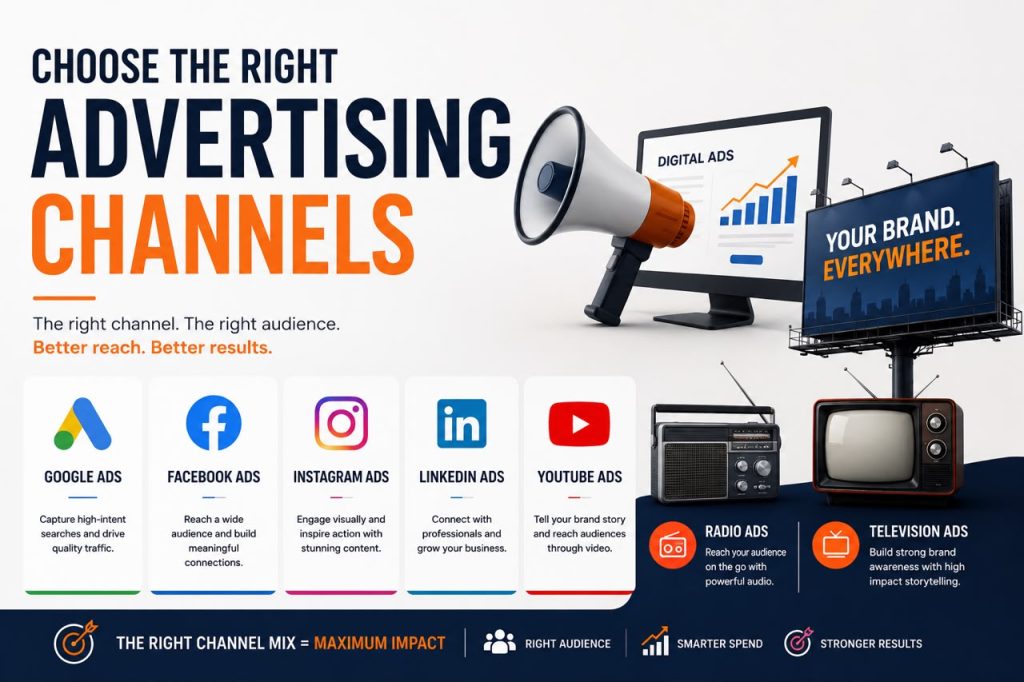
Every advertising platform serves a different purpose.
Digital Advertising
Ideal for:
- Lead generation
- Website traffic
- Online sales
- Audience targeting
Examples include:
- Google Ads
- Facebook Ads
- Instagram Ads
- LinkedIn Ads
- YouTube Ads
Billboard Advertising
Best for:
- Brand awareness
- Product launches
- High visibility
- Building credibility
Billboards are especially effective in high-traffic locations where your audience passes daily.
Radio Advertising
Radio remains one of Nigeria’s most accessible media channels.
It’s ideal for:
- Local businesses
- Promotional campaigns
- Regional awareness
- Event marketing
Television Advertising
Television offers extensive reach and combines visuals with storytelling.
It works well for:
- National campaigns
- Consumer brands
- Financial services
- Telecommunications
- Government campaigns
Step 4: Allocate Your Budget Wisely
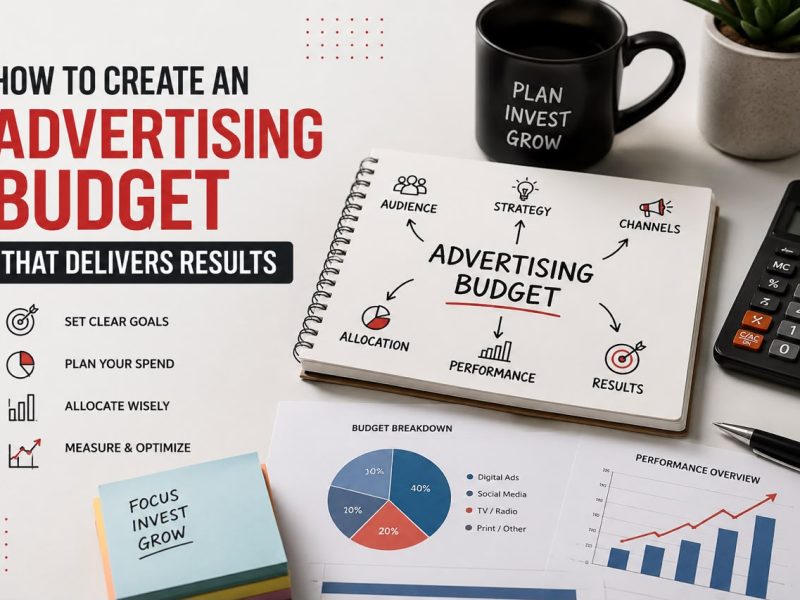
There is no universal formula, but a balanced approach often produces the best results.
For example:
- Digital advertising: 40%
- Outdoor advertising: 25%
- Radio advertising: 20%
- Television advertising: 15%
The ideal mix depends on your industry, target audience, campaign goals, and available budget.
Rather than spreading your budget evenly across every channel, focus on the platforms most likely to reach your customers.
Step 5: Set Aside a Budget for Creative Production
Many businesses account for media placement but overlook creative production.
Remember to budget for:
- Graphic design
- Photography
- Video production
- Copywriting
- Voice-over recording
- Motion graphics
- Landing page development
High-quality creative assets often determine whether an advertising campaign succeeds or fails.
Step 6: Monitor Performance
An advertising budget should never be static.
Track key performance indicators (KPIs) such as:
- Reach
- Impressions
- Click-through rate (CTR)
- Leads generated
- Sales
- Cost per lead
- Return on advertising spend (ROAS)
Regular monitoring helps you identify what’s working and where adjustments are needed.
Step 7: Leave Room for Optimization
Consumer behaviour changes, competitors launch new campaigns, and market conditions evolve.
Set aside a portion of your advertising budget to:
- Test new creatives
- Explore new platforms
- Increase spending on high-performing campaigns
- Respond to seasonal opportunities
Flexibility allows you to adapt quickly and maximize results.
Common Advertising Budget Mistakes

Avoid these common pitfalls:
1. Spending Without a Strategy
Advertising without clear objectives often leads to poor results.
2. Choosing the Cheapest Option
Lower advertising costs don’t always deliver the best value. Focus on return on investment rather than price alone.
3. Ignoring Performance Data
Failing to analyze campaign results makes it difficult to improve future performance.
4. Putting Everything Into One Channel
Relying on a single platform limits your reach.
Integrated campaigns that combine digital, radio, television, and outdoor advertising often produce stronger results.
5. Expecting Instant Results
Brand awareness and customer trust take time to build. Consistency is essential for long-term advertising success.
read more on common advertising mistakes here
Why Media Planning Matters
A well-planned advertising budget is only one part of a successful campaign.
Professional media planning ensures:
- The right audience is targeted
- Budgets are allocated efficiently
- Campaigns run at the right time
- Performance is continuously optimized
This strategic approach reduces waste and improves overall campaign effectiveness.
Read more on strategic approach for your ads here
Frequently Asked Questions
How much should a business spend on advertising?
The right amount depends on your business size, industry, objectives, and growth stage. The key is to align your budget with your goals and expected return on investment rather than choosing an arbitrary figure.
Should small businesses have an advertising budget?
Yes. Even a modest budget, when spent strategically, can generate meaningful results. Starting with focused campaigns and scaling based on performance is often more effective than waiting until a larger budget is available.
Is digital advertising enough?
Digital advertising is highly effective, but many businesses benefit from combining it with traditional channels such as radio, television, and billboard advertising to increase brand awareness and reinforce messaging.
How often should I review my advertising budget?
Review your budget regularly—monthly for ongoing campaigns and after major campaigns or seasonal promotions. Frequent reviews help you adjust spending based on performance.
An advertising budget is more than a financial plan—it’s a roadmap for business growth.
By defining clear objectives, understanding your audience, selecting the right media channels, investing in quality creative assets, and monitoring campaign performance, you can ensure every advertising investment contributes to measurable results. The most successful businesses don’t simply spend more on advertising; they spend smarter
Want to make every advertising naira count?
Apple Media helps businesses develop strategic advertising budgets, create integrated media plans, and execute high-performing campaigns across digital, radio, television, and outdoor media.
Contact Apple Media today to build an advertising strategy that delivers measurable business growth.